




Primary source research and synthesis · Multidisciplinary artistic production · Exhibition curation · Universal design and accessibility · Sci-Art collaboration · Public program development
A multimedia exhibition exploring perception through the history of 19th-century education for people who are blind or visually impaired, in which touch, hearing, and smell are as essential as sight.
Common Touch: The Art of the Senses in the History of the Blind is foremost a multisensory experience. Sight does not dominate here — touch, hearing, and smell all play a role.
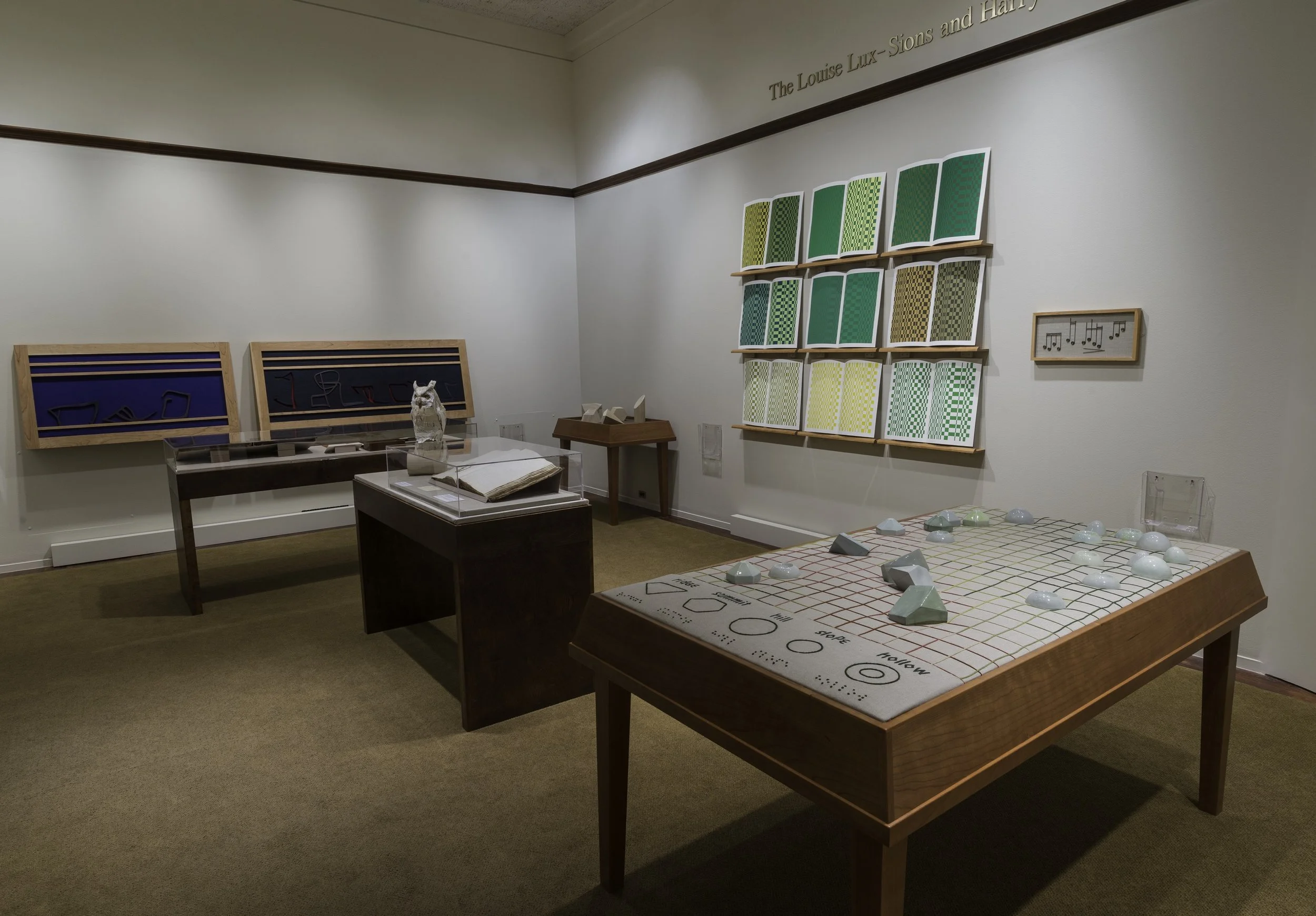
At its heart, the exhibition tells the story of an artisan, a mathematician, a composer, and a surveyor. Drawing on their accomplishments, Teresa developed “first person” constructions for each individual, infused with the geometric and abstract forms fundamental to the education of the blind in the 19th century. These forms were tools the blind used to navigate and perceive the physical world.
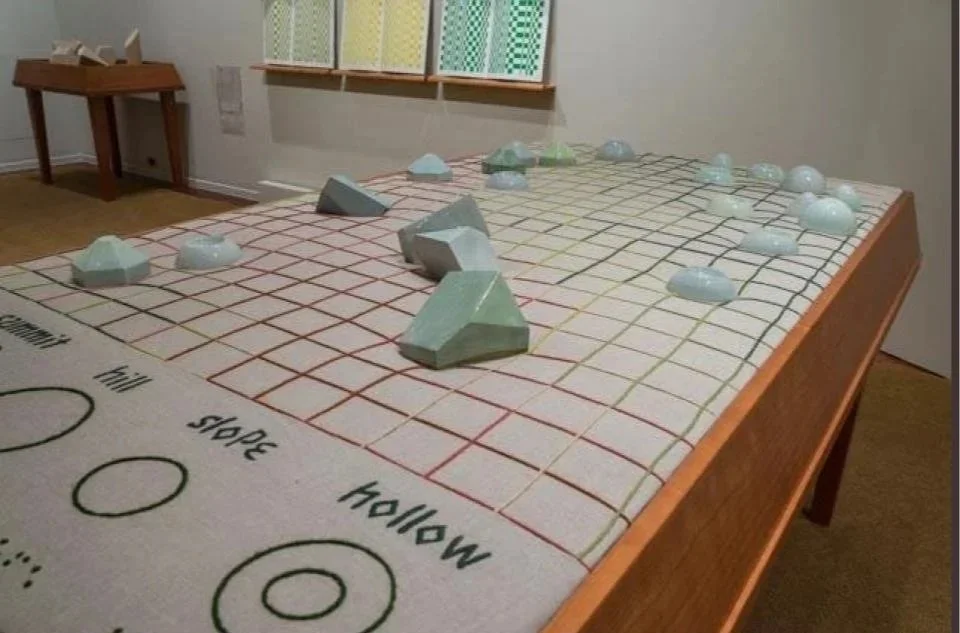
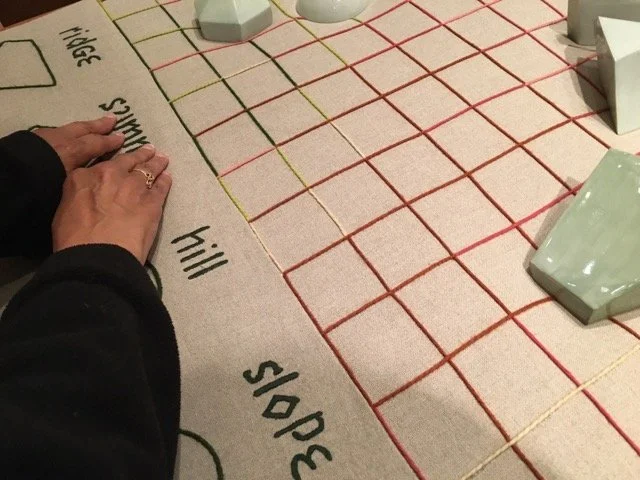
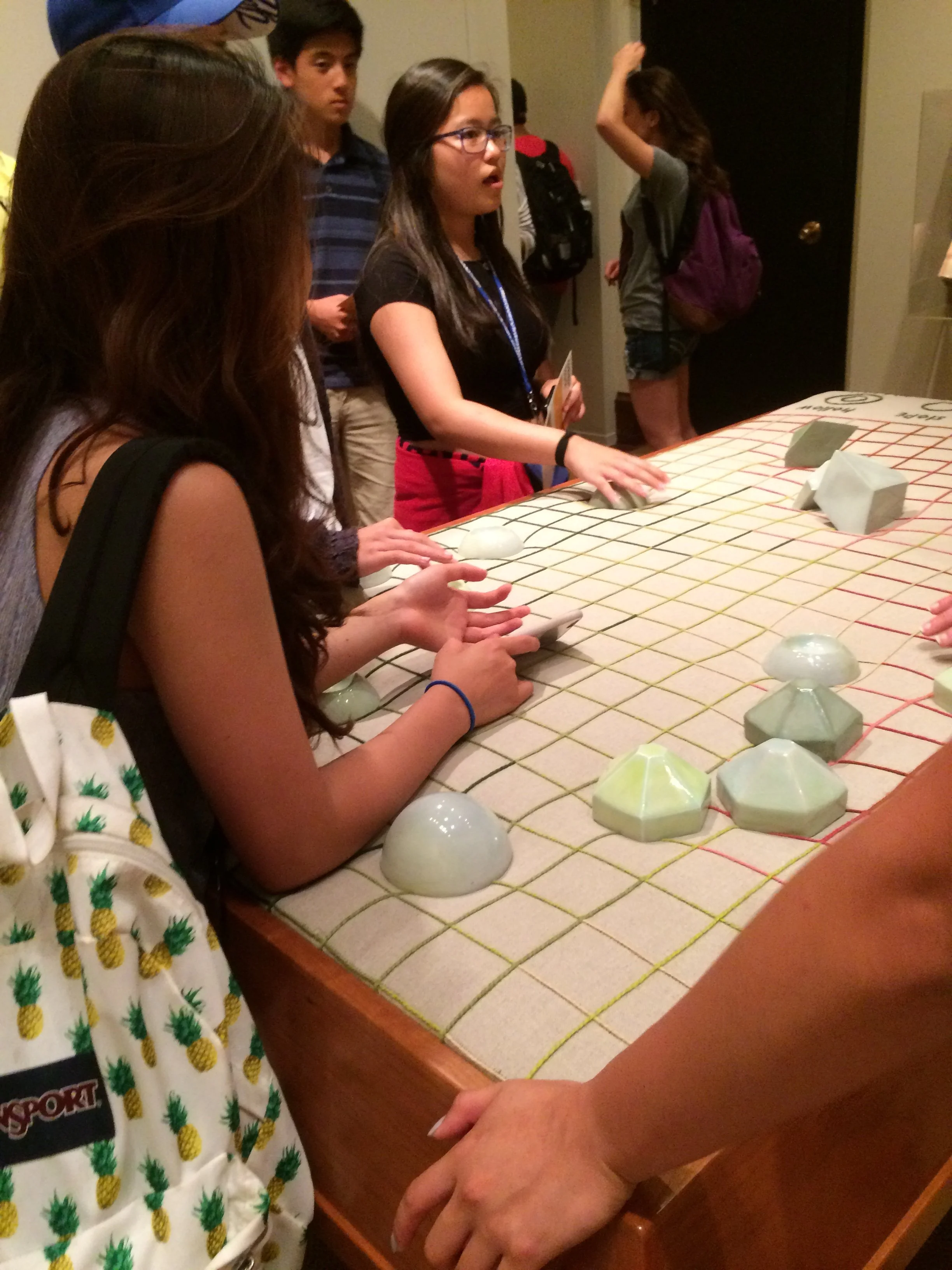
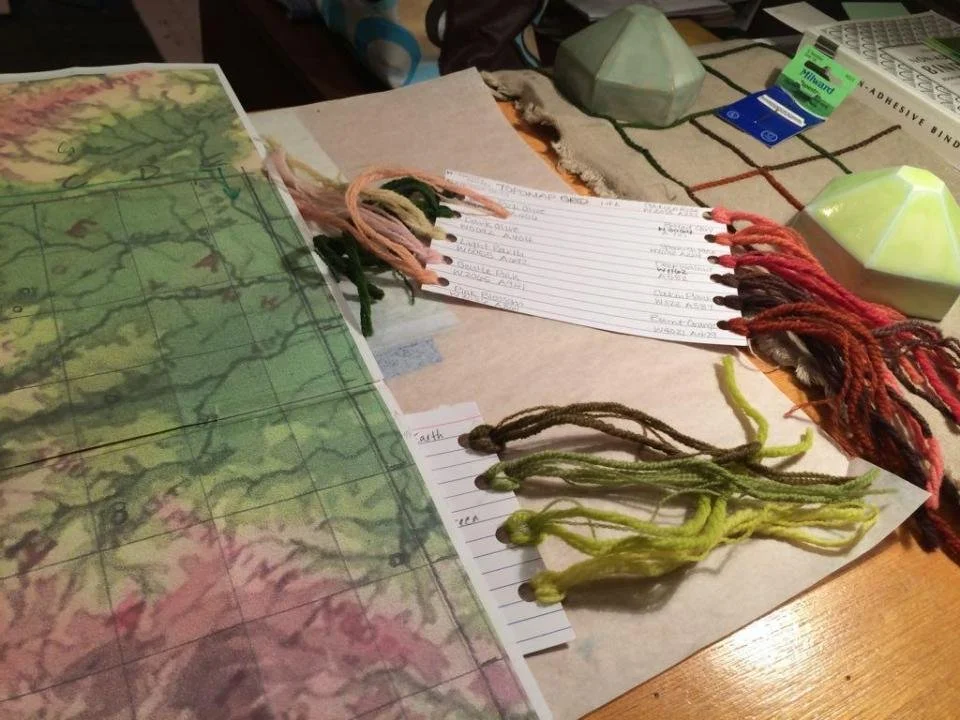
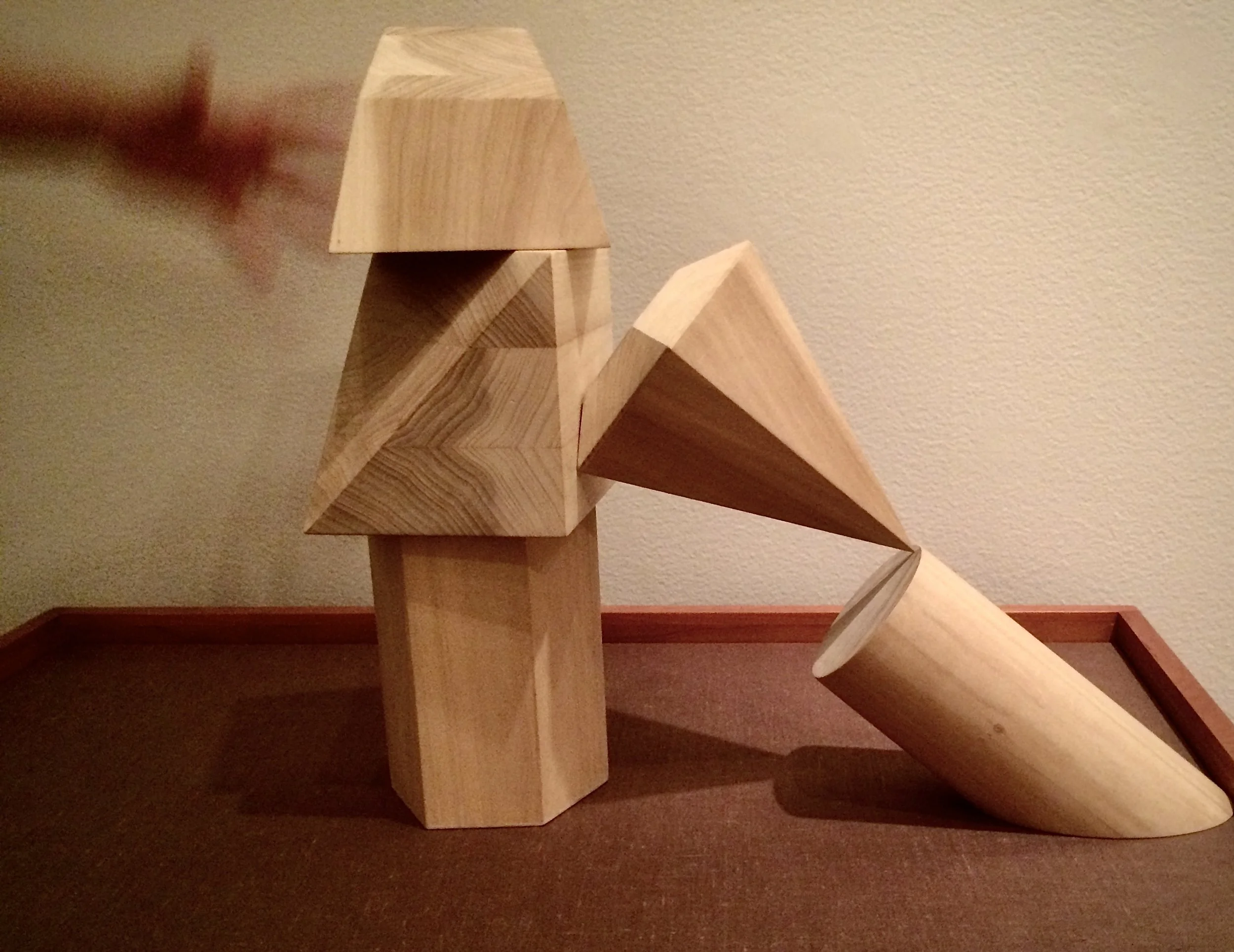
Geometry is a repeating theme, reflecting the prevalent use of grids and abstraction in 19th-century education for the blind. Gift #3 responds to the work of blind mathematician Nicholas Saunderson (1682–1739), a lecturer at Cambridge known for developing tactile tools for complex calculations and geometric proofs. Gift #5 is an abstract interpretation of the life of English surveyor and road builder John Metcalf (1717–1810), who built over 180 miles of road in and around Yorkshire. An embroidered grid of pink, green, and brown threads denotes different environments where Metcalf worked, with porcelain forms representing landforms readable by touch.
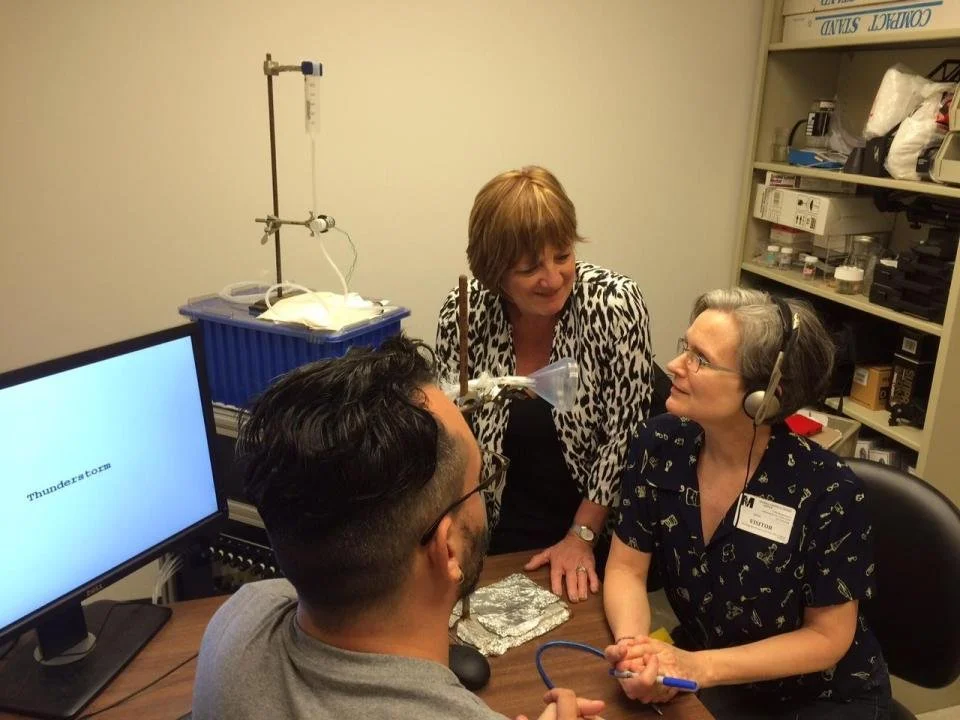
Gift #6 offers two vignettes conveyed through sound and smell from an olfactometer, produced in collaboration with sound engineer John Myers, the Monell Chemical Senses Center, and the Demeter Fragrance Library. Moments in the soundscape trigger associative smells — Reed Sweet-grass, cordovan leather, hounds, and gunpowder — to convey a predawn foxhunt.
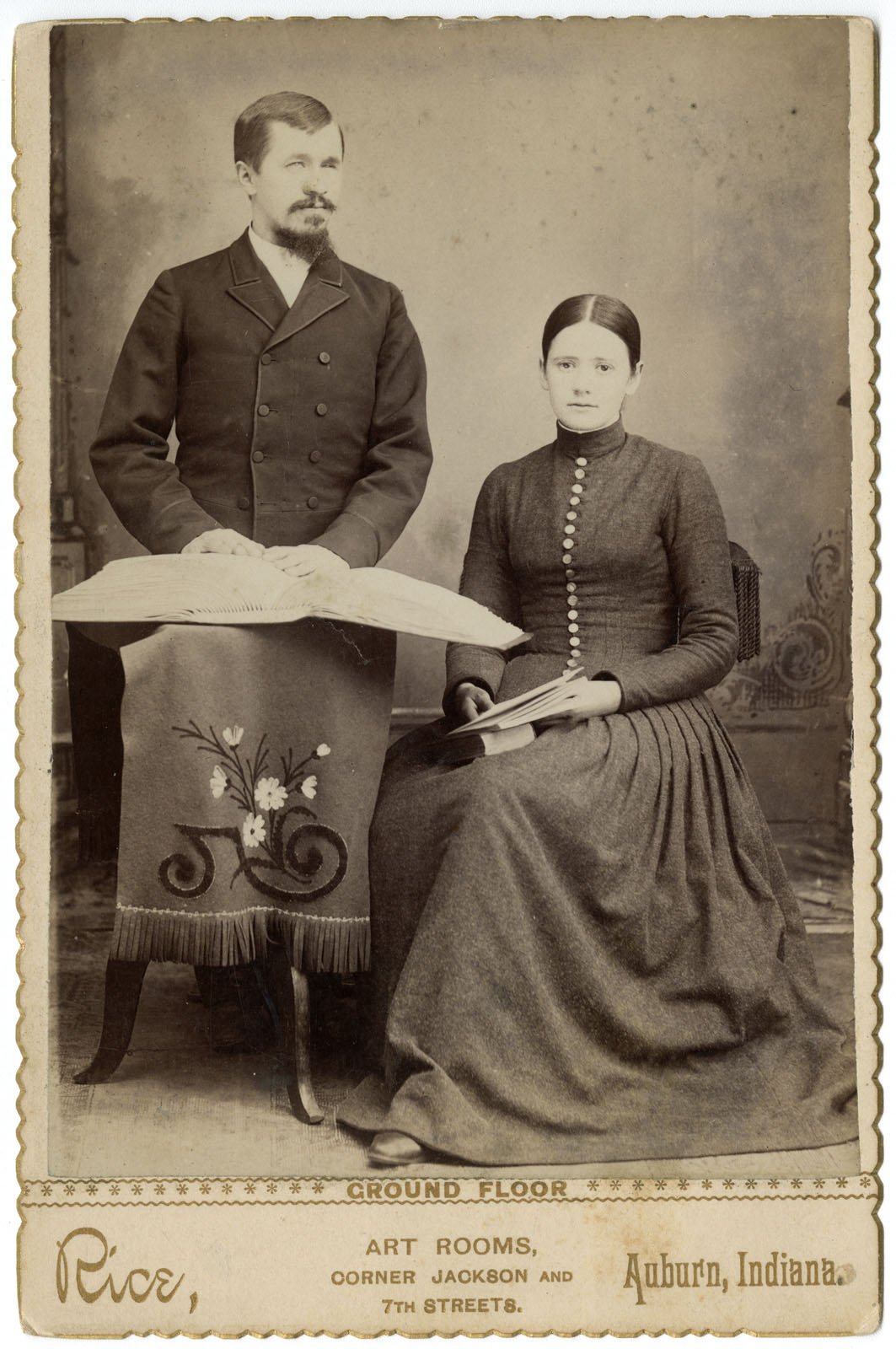
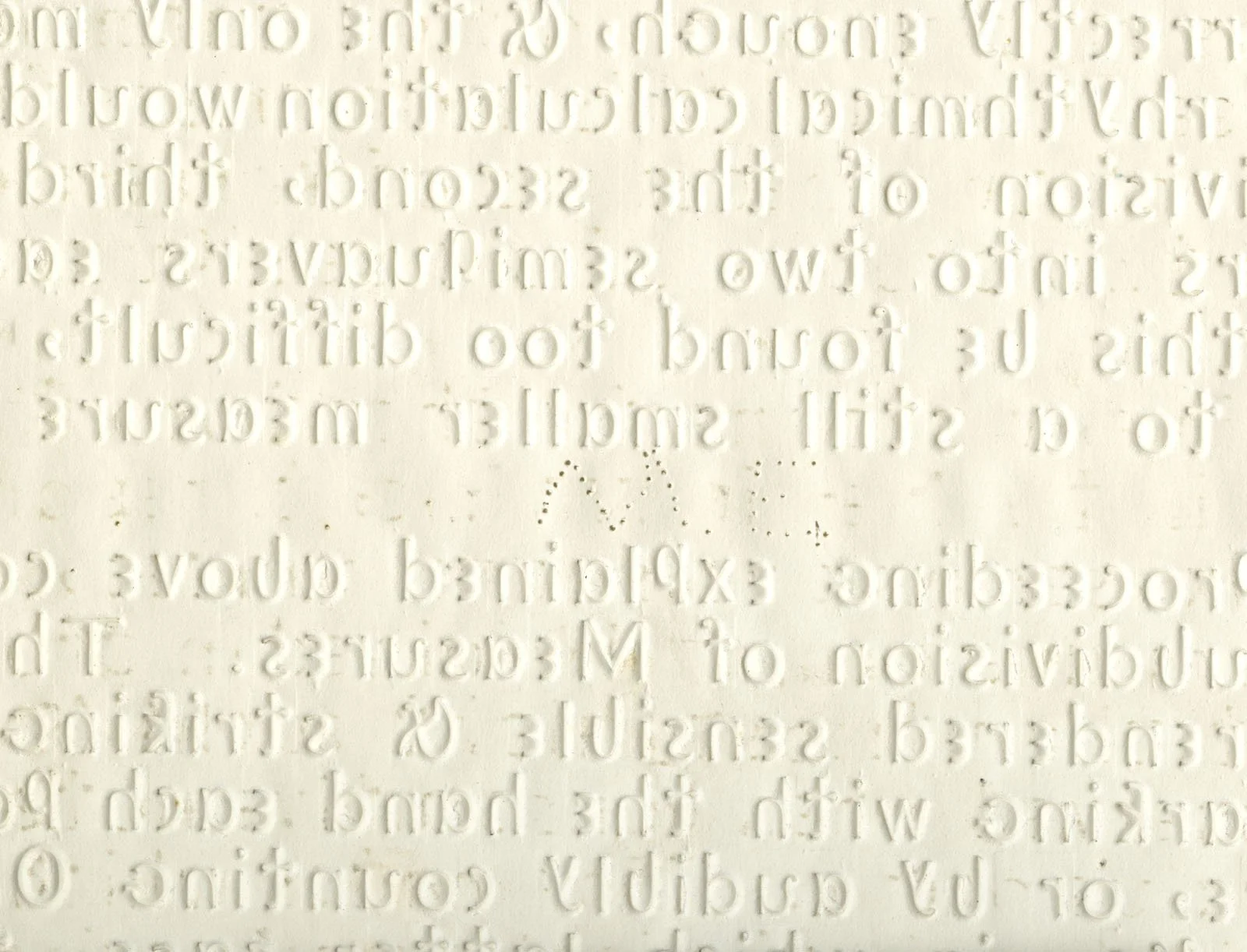
The exhibition is framed by expressions of individualism. It opens with a student’s raised inscription — the letters “ME” punched into the center of a page of a 19th-century textbook — asserting the writer’s presence. It closes with an 1890 studio portrait of the Reverend Frederick and Mrs. Susanna Jacobson, a formal image that quietly contradicts centuries-old perceptions of blindness: educated, independent, and living a full life.
Through art and artifact, Common Touch examines transformations in our understanding of sight while exploring the nature and limits of perception.
Common Touch was supported by a grant from the Pew Center for Arts & Heritage.
Common Touch was designed to be fully accessible to visitors of all abilities. The exhibition was accompanied by a series of public programs including performances, lectures, and a panel discussion with the Vision Council. Learn more at commontouch.librarycompany.org/events.
Publication
Common Touch: The Art of the Senses in the History of the Blind, the exhibition catalog, includes an introduction by Stephen Kuusisto, author of Planet of the Blind and University Professor in Disability Studies at Syracuse University. Published by the Library Company of Philadelphia, 2016.
Further Reading
Warne, Vanessa. By Touch Alone: Blindness and Reading in Nineteenth-Century Culture. University of Michigan Press, 2025.
Collaborators
Katherine Allen · Rachel D’Agostino · Pam Dalton · Chris Maute · Jennifer McTague · John Myers · Erika Piola
Vision Council
Katherine Allen, Accessibility Consultant · Henry Butler, Billboard Top 10 Jazz musician · Suzanne Erb, choral singer and teacher, Networks for Training and Development, Philadelphia · Edery Herrera, IT educator to the blind and visually impaired · Dorrie Rush, Director, Henry A. Grunwald Technology Center, Lighthouse Guild, New York City
Partnerships
Free Library of Philadelphia · Monell Chemical Senses Center · New York Institute for Special Education · Philadelphia Jazz Project · Philly Touch Tours
Photos
(all works were completed in 2015–2016)
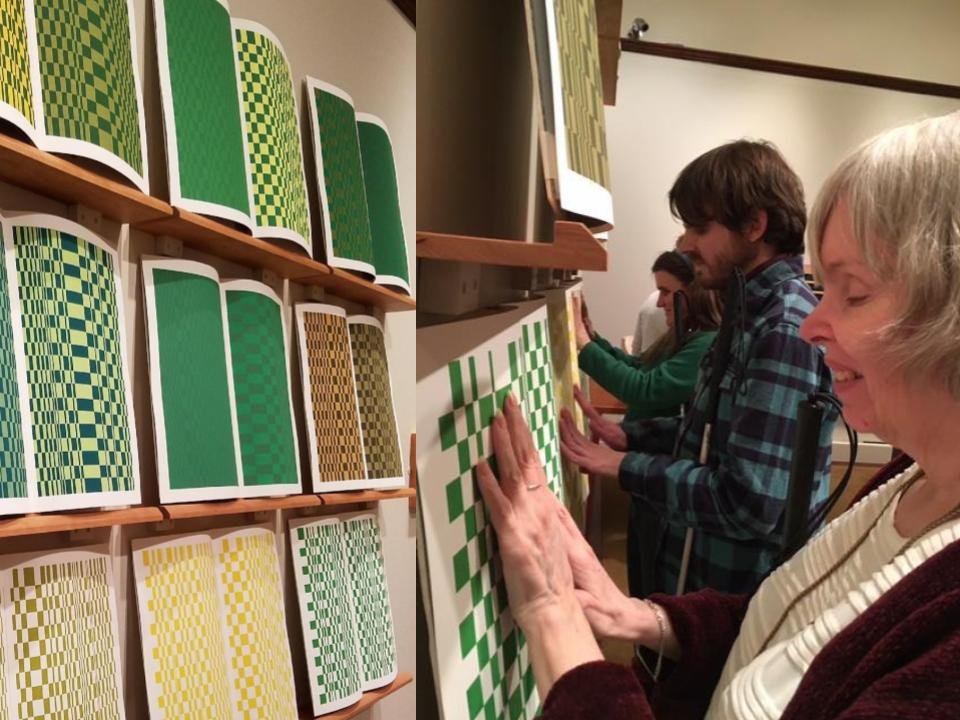
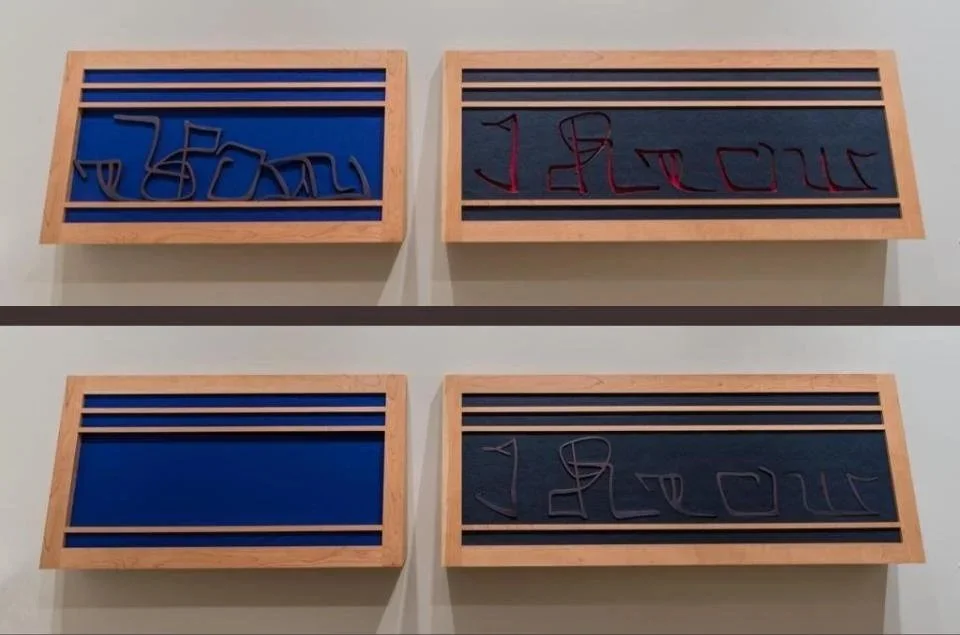
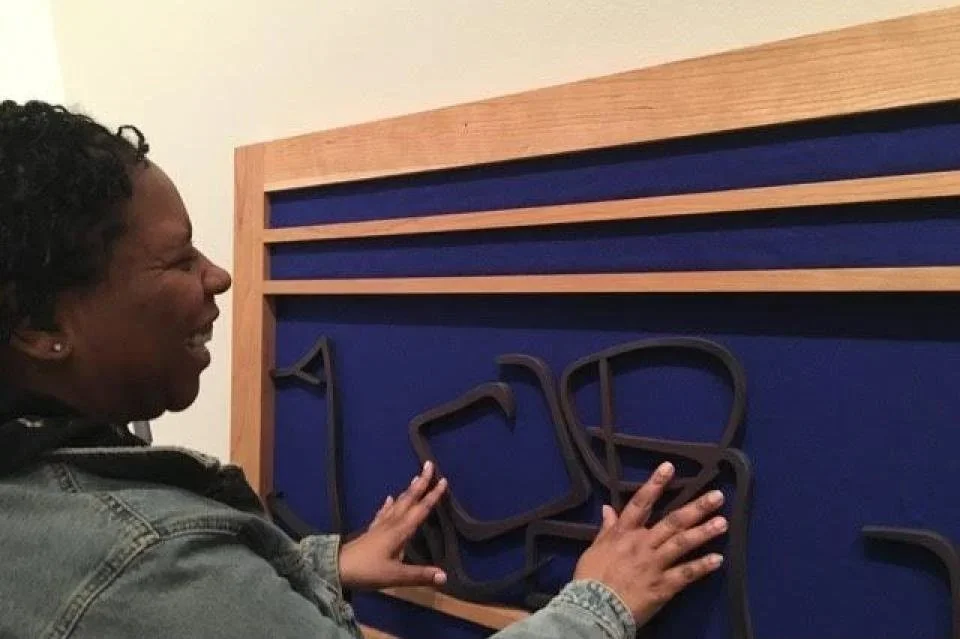
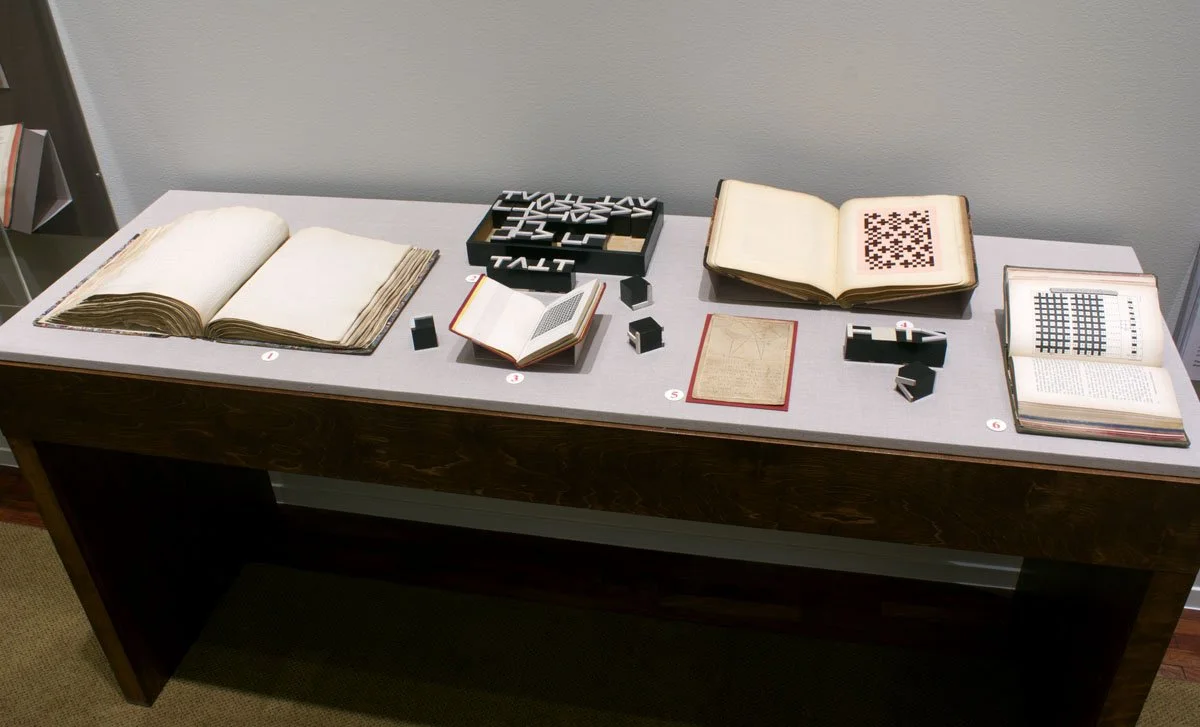
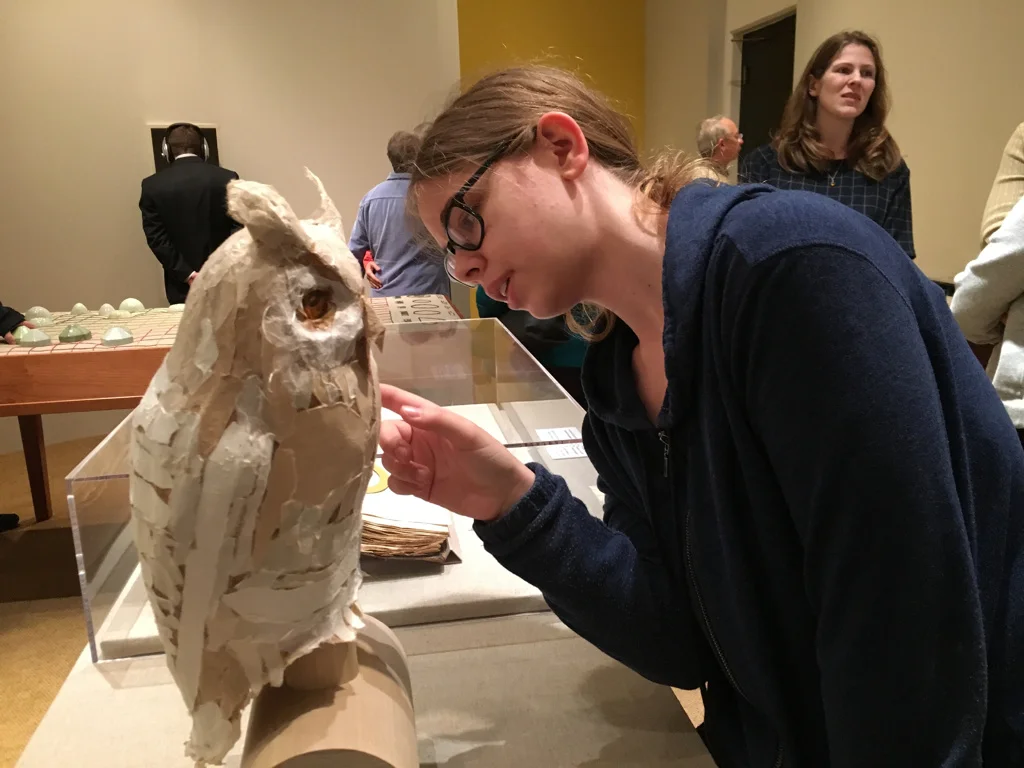
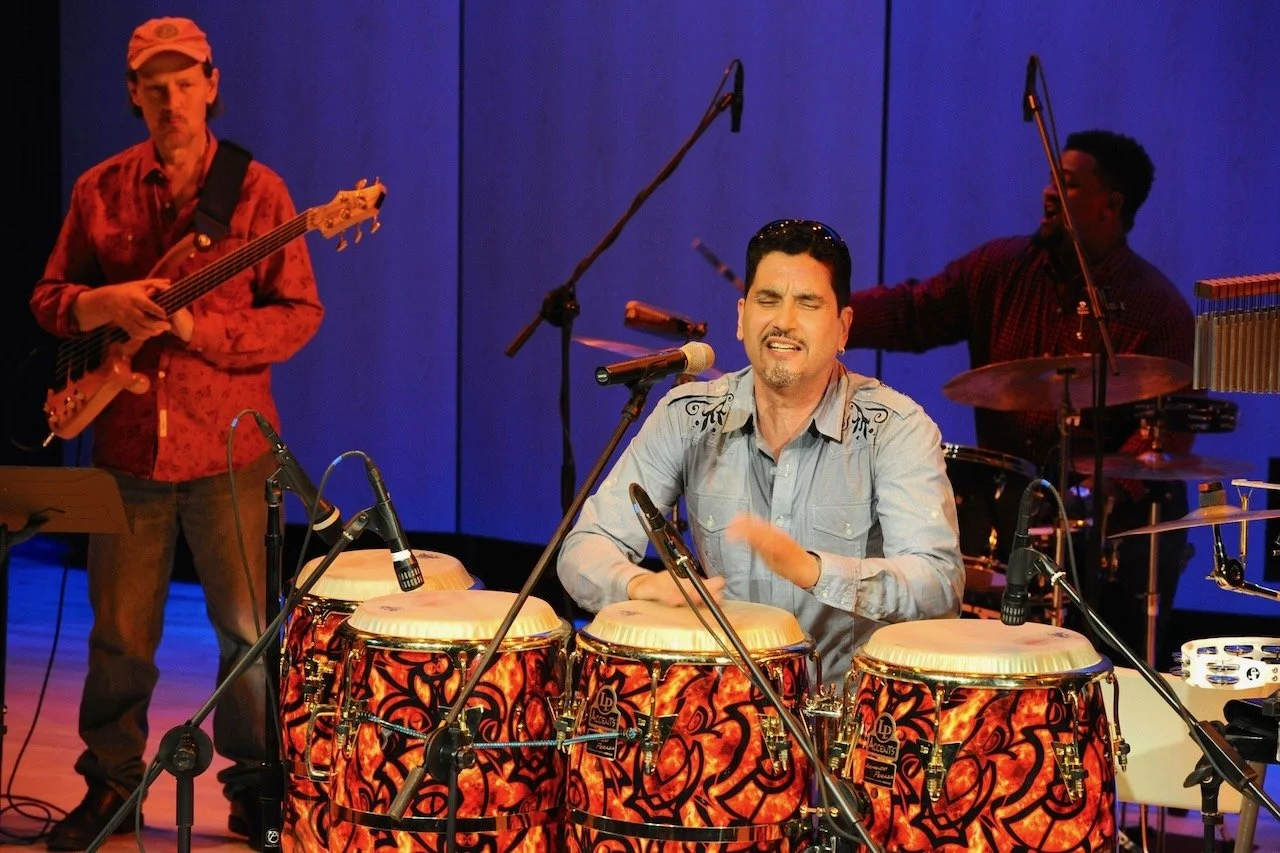
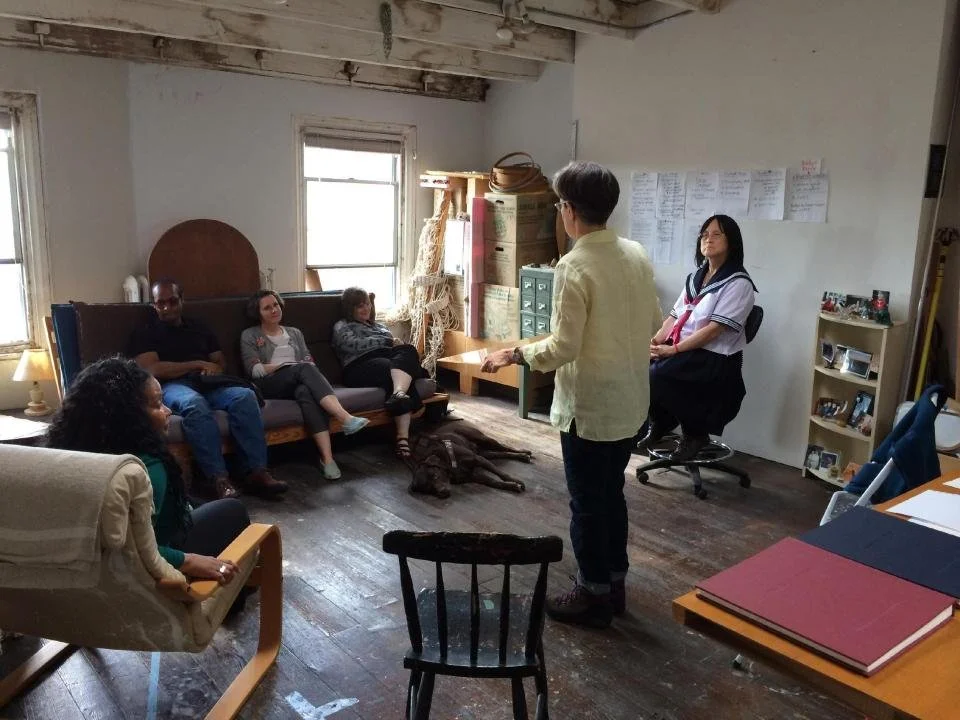
1. Artist Teresa Jaynes and visitor interacting with Gift #4, silkscreen and cherry · 2. Gift #4, detail · 3. Gift #5, embroidered canvas, porcelain and cherry · 4. Gift #5, detail · 5. Visitors interacting with Gift #5 · 6. Common Touch exhibition, shows Gifts #1–#5 · 7. Visitor interacting with Gift #2, felt and cherry · 8. Gift #2, shows work in two states · 9. Visitor interacting with Gift #2 · 10. Studio portrait of Rev. Frederick and Mrs. Susanna Jacobson, May 3, 1890, Albumen print · 11. Visitors interacting with Gift #3, poplar · 12. Shows student’s inscription, “ME” in the center of a page from The Universal School of Music, Adolph Bernard Marx, 1877 · 13. Case with various texts and educational tools, 1833–1894 · 14. Visitor interacting with Gift #1, embossed paper using passages from blind authors in three raised print systems · 15. Master percussionist Pablo Batista and his Latin Jazz Ensemble, Common Touch program at the Free Library of Philadelphia · 16. Work in progress, Gift #6, Teresa at Monell with Dr. Pam Dalton and Chris Maute · 17. Work in progress, Gift #5 · 18. Teresa with Vision Council members · 19. Visitor interacting with Gift #3
Photo credits: Concetta Barbera · Trish Maunder · Gary McKinnis · Jennifer McTague