

Curation and exhibition design · Oral history · Community research · Educational adaptation
A multidisciplinary exhibition exploring how folk arts sustain collective identity and struggles for justice, developed through interviews with 170 Philadelphia activists spanning four generations.
As Exhibition Director at the Philadelphia Folklore Project, Teresa interviewed, documented, and curated exhibitions on Philadelphia’s folk arts and cultural heritage over five years. Her work culminated in Folk Arts of Social Change — a multidisciplinary exhibition exploring how folk arts sustain collective identity and struggles for justice, equity, and freedom.
Developed through interviews with 170 Philadelphia activists spanning four generations, the exhibition addressed movements including anti-war and labor organizing, the Black Panthers, Stop Rizzo, ACT UP Philadelphia, and LGBTQ rights and women’s reproductive rights. Participants contributed stories, memorabilia, artwork, and protest materials, resulting in more than 400 artifacts.
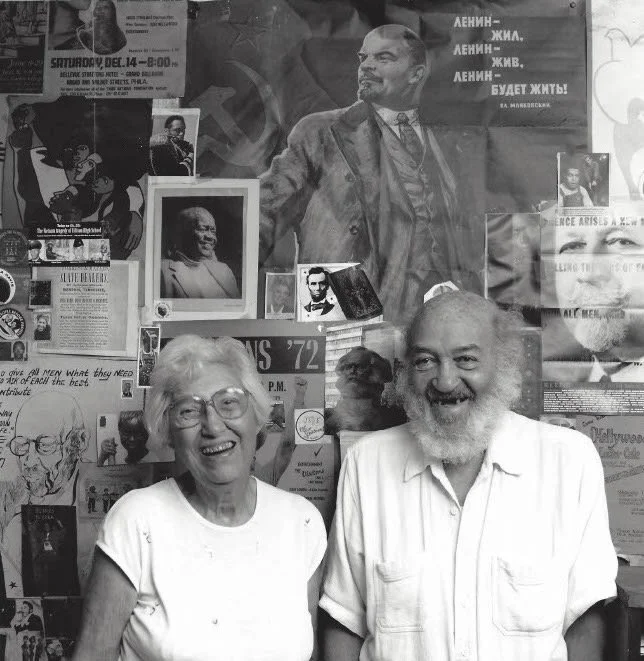
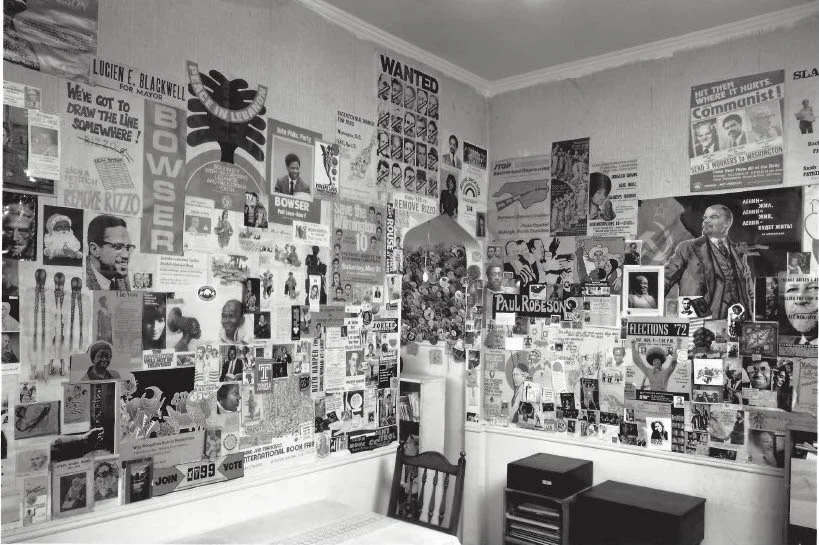
Highlights included the reinstalled dining room of Bill and Mariam Crawford, whose collaged walls traced four decades of activism and Philadelphia movement history, and Big Shoes to Fill — an installation pairing activists’ shoes with personal accounts of political action. The latter was later adapted as a middle school classroom activity by Civil Rights Teaching, extending the exhibition’s reach into Philadelphia classrooms.
The reinstallation of the Crawford’s dining room was accomplished by the Conservation Center for Art & Historic Artifacts.
Folk Arts of Social Change was supported by the Pew Center for Arts & Heritage.
Partnerships
Fleisher Art Memorial
Photos
1. Bill and Mariam Crawford in their dining room · 2. Restaging of the Crawford’s dining room as part of Folk Arts of Social Change
Photo credits: Teresa Jaynes